
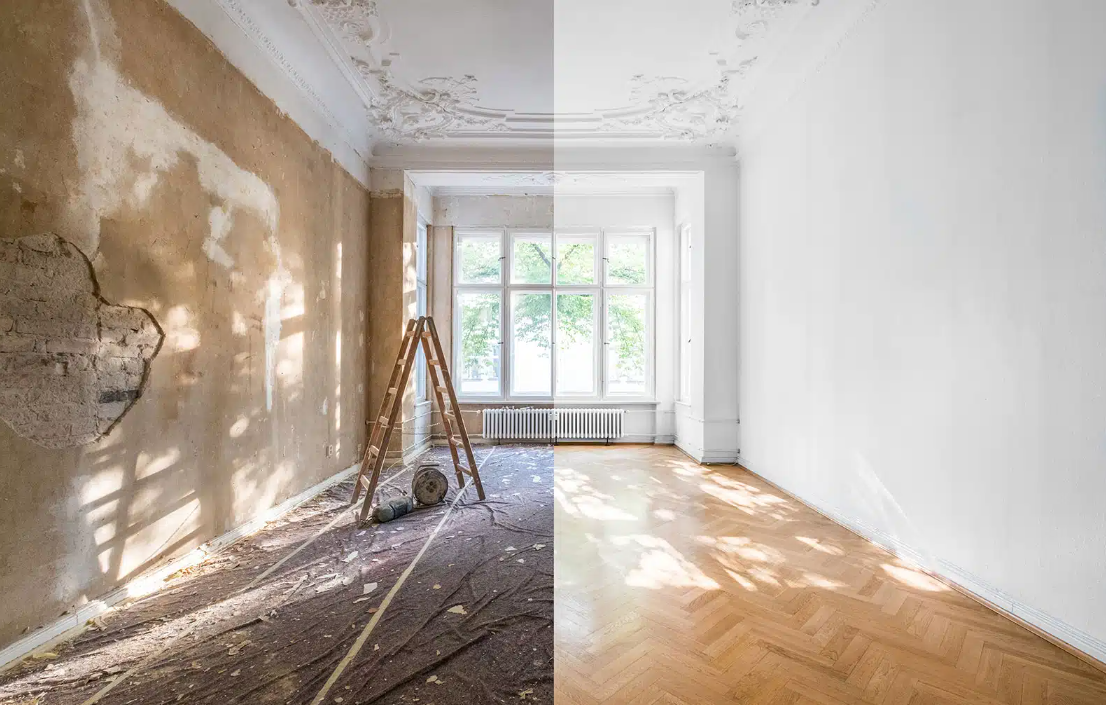
Building renovation involves updating or improving an existing structure to meet current standards, enhance functionality, or extend its lifespan. Renovations can vary in scope, from minor cosmetic changes like painting and flooring upgrades to more extensive structural modifications, such as rewiring, plumbing, or expanding the building. Renovation projects are common for residential homes, commercial buildings, and historical properties.
The renovation process typically begins with a thorough assessment of the existing building to evaluate its condition, identifying areas that need repairs, updates, or improvements. This can include structural elements like foundations, walls, or roofing, as well as systems such as HVAC, plumbing, or electrical. After the assessment, the project scope is defined, and detailed plans are created, which may involve obtaining permits from local authorities, especially for major changes or building alterations.
Renovations often focus on improving energy efficiency, updating outdated systems, enhancing aesthetics, or increasing the building’s value. For example, insulation, energy-efficient windows, or modern HVAC systems might be installed to reduce utility costs. Interior spaces may be redesigned for better flow, adding or removing walls, updating kitchens and bathrooms, or adding modern features like smart technology.
Throughout the renovation, careful attention is paid to adhering to building codes and regulations to ensure the project is safe and compliant. Contractors work closely with architects, engineers, and designers to make sure the vision for the renovation is achieved while addressing any unforeseen issues that arise.
Renovation is often seen as a cost-effective alternative to demolition and rebuilding, allowing property owners to maintain a structure’s historical charm while upgrading it for modern use.